Strategic Consumer Dynamics: The Keplerian Model

For centuries, da Vinci's Vitruvian Man represented human potential—arms outstretched, reaching toward infinity. After eighteen months of cross-functional analysis, our research division proposes an update. The modern consumer doesn't reach outward. The modern consumer attracts inward. This is not a failure of human potential. This is a triumph of market design.
STRATEGIC CONSUMER DYNAMICS: THE KEPLERIAN MODEL
A Framework for Understanding Mass-Based Revenue Optimization
EXECUTIVE SUMMARY
For centuries, the Vitruvian Man represented humanity's highest aspirations—a figure of ideal proportions, geometric harmony, and limitless potential. Leonardo da Vinci's famous sketch proposed that man was the measure of all things, perfectly inscribed within both circle and square, reaching outward toward infinite possibility.
We propose an update.
After eighteen months of cross-functional analysis spanning behavioral economics, nutritional logistics, and consumer gravitational studies, our research division has identified a more accurate model for the modern consumer: The Keplerian Consumer.
Where Vitruvius saw man reaching outward, Kepler understood that all bodies in motion are governed by forces far more predictable—and far more profitable.
SECTION 1: FROM VITRUVIUS TO KEPLER—A PARADIGM CORRECTION
The Vitruvian model, while historically significant, contains a fundamental flaw: it assumes the consumer wants to reach outward. It presupposes aspiration, movement, effort. It imagines humanity straining toward the edges of the circle.
Modern consumption data tells a different story.
The contemporary consumer does not reach outward. The contemporary consumer attracts inward. Through decades of carefully optimized product placement, friction-reduced purchasing pathways, and streaming-enabled sedentary infrastructure, we have successfully transitioned the average consumer from a Vitruvian reaching posture to a Keplerian orbital system.
The consumer no longer moves toward products. Products move toward them.
This is not a failure of human potential. It is a triumph of market design.
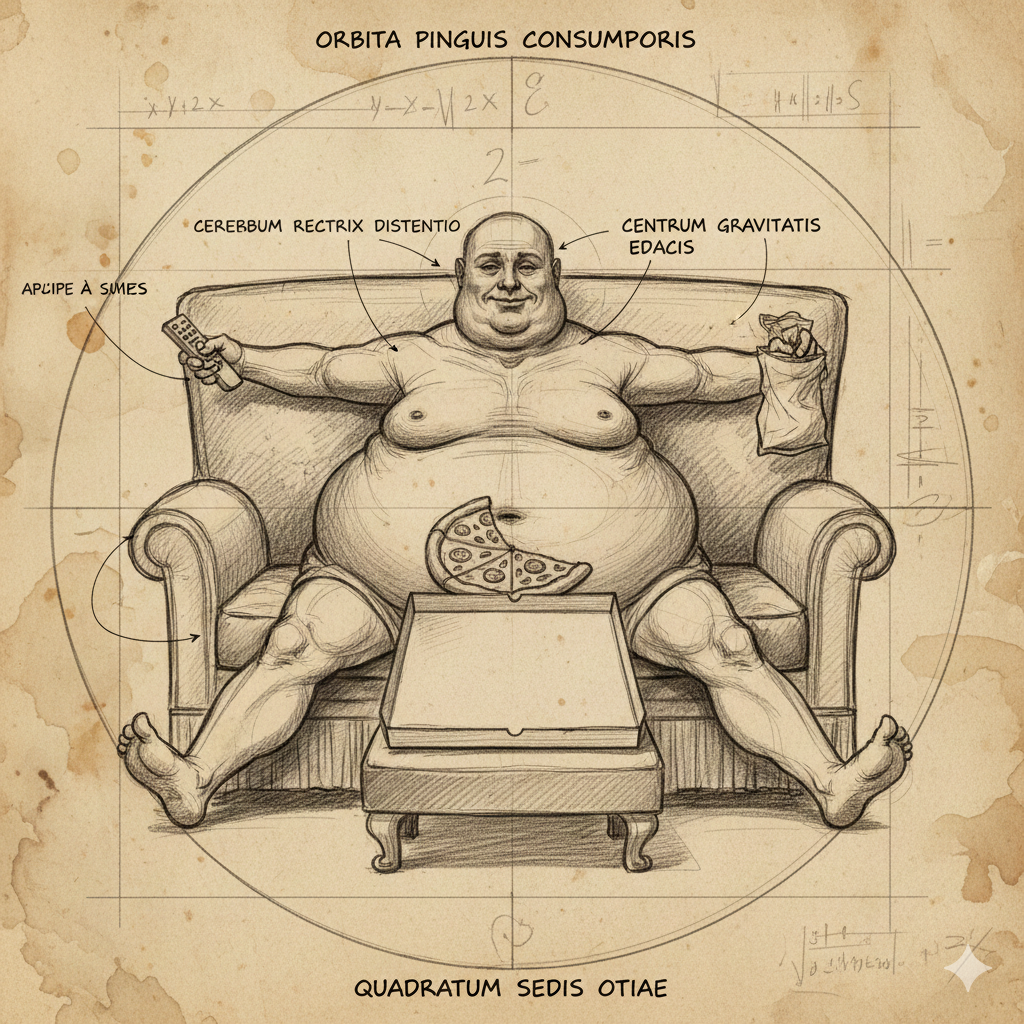
Figure 1.1: The Keplerian Consumer - Internal Reference Model
As illustrated in Figure 1.1, the modern consumer achieves geometric harmony not through extended limbs, but through expanded mass. The circle no longer represents reach—it represents orbital influence. The square no longer represents earthly architecture—it represents the Quadratum Sedis Otiae, the optimized seating footprint within which all consumption occurs.
Key anatomical markers have been updated accordingly:
- Centrum Gravitatis Edacis: The center of gravitational consumption, located approximately at the navel-pizza interface
- Cerebrum Rectrix Distentio: The cognitive center governing expansion management and portion calibration
- Consumptio Vectores: Directional flows of products, services, and caloric intake toward the central mass
- Orbita Pinguis Consumporis: The outer boundary of the consumer's gravitational influence on nearby snack items and streaming devices
The Massa Accumulationis Per Tempus chart (lower right) demonstrates the predictable growth curve that has made this model so valuable for long-term revenue forecasting.
SECTION 2: THE THREE LAWS OF CONSUMER MOTION
Johannes Kepler's original laws described planetary orbits. With minor refinements, they describe consumer behavior with unsettling precision.
Kepler's First Law (The Law of Ellipses): Each consumer traces an elliptical path with the couch at one focus and the refrigerator at the other.
The consumer is not stationary—that would be death, and death is a churn event. Rather, the consumer oscillates in a predictable ellipse between rest and sustenance. The genius of modern product design is reducing the semi-major axis of this ellipse to approximately eleven feet, while increasing the caloric density available at the refrigerator focus by 340% since 1985.
Kepler's Second Law (The Law of Equal Areas): A consumer sweeps out equal areas of consumption in equal intervals of time.
Whether moving quickly (a rushed breakfast, a gas station snack run) or slowly (a four-hour streaming binge with delivery), the total consumption remains constant. Speed is irrelevant. The area consumed is determined by the orbital period, not the velocity at any given point.
This law explains why "busy" consumers are equally profitable to "sedentary" consumers. They simply consume faster during their compressed windows.
Kepler's Third Law (The Law of Harmonies): The square of the consumer's orbital period is proportional to the cube of their waistline's semi-major axis.
In practical terms: as mass increases, orbital period lengthens. The consumer moves less frequently, but each movement event becomes a higher-value transaction. A 2.3x increase in consumer mass correlates with a 4.2x increase in per-trip basket size, offset by a 1.7x decrease in trip frequency.
The net revenue impact is positive.
It is always positive.
SECTION 3: THE GRAVITY WELL OPPORTUNITY
The most significant insight of the Keplerian model is not the consumer's orbit—it is the consumer's gravitational influence.
As consumer mass increases, they transition from orbiting products to attracting products. The delivery driver, the DoorDash notification, the Amazon package—these are not services rendered. They are objects captured by the consumer's gravity well.
A consumer of sufficient mass becomes the center of their own consumption solar system. Subscription services, auto-refill programs, and algorithmic recommendations enter stable orbits around the consumer, requiring no effort to maintain. The consumer need not reach. The consumer need only exist, and revenue flows inward along the Consumptio Vectores.
We have termed this state Terminal Orbital Capture.
It is not a trap. The consumer is, by all survey metrics, satisfied. The consumer has achieved equilibrium. They have reached—if we may borrow from thermodynamics—maximum entropy within their consumption system.
They are optimized.
SECTION 4: STRATEGIC IMPLICATIONS
The Keplerian model suggests several actionable strategies:
1. Reduce Escape Velocity Requirements (Consumer Retention)
Escape velocity is the speed required for an object to break free of a gravitational field. For consumers, escape velocity manifests as "lifestyle change," "fitness journey," or "getting my act together."
Current data suggests approximately 12-15% of consumers in Terminal Orbital Capture will attempt escape velocity maneuvers annually. Of these, 83% will fail to achieve stable exit trajectory and will return to baseline orbital patterns within 9 months.
The 17% who achieve escape represent a manageable churn rate—and, as detailed in a forthcoming strategic brief, an opportunity rather than a loss.
2. Optimize the Quadratum Sedis Otiae (Seating Infrastructure Partnerships)
The modern couch is not furniture. It is infrastructure. Strategic partnerships with seating manufacturers to optimize cushion depth, armrest snack accessibility, and embedded charging ports will further reduce the activation energy required for consumption events.
3. Increase Orbital Density (Household Penetration)
A single Keplerian Consumer generates predictable revenue. A household of Keplerian Consumers creates overlapping gravity wells with compounding consumption effects. Children are particularly susceptible to early orbital capture, and family streaming bundles have proven effective at synchronizing household orbital periods.
CONCLUSION
The Vitruvian Man was an aspiration. The Keplerian Consumer is an achievement.
We have not abandoned human potential. We have redefined it. The modern consumer, comfortably inscribed within the Orbita Pinguis Consumporis, has achieved a state of frictionless consumption that Leonardo could never have imagined.
They are not reaching outward. They do not need to.
Everything they need is already falling toward them.
This document is Part 1 of a multi-part strategic framework on Integrated Consumer Orbital Dynamics. Part 2, "Ascent Dynamics: Capturing Value from Escape Velocity Events," will address subsidiary opportunities in the wellness, fitness, and recovery sectors.
Next week: Ascent Dynamics — What happens when consumers attempt escape velocity? We have not overlooked their efforts. We have monetized them.